
Book Excerpt: HELL’S PRINCESS by Harold Schechter
Little A; April 1, 2018
Any fans of true crime here? Crime by the Book is first and foremost a place to explore crime fiction, but every now and then, a little glimpse into the world of true crime is called for. When I’m not reading crime fiction, I actually spend a lot of time absorbing all things true crime—whether that’s in the form of podcasts, documentaries, articles, you name it. My personal favorite true crime story? Belle Gunness. Today I’m so excited to share an excerpt from HELL’S PRINCESS: The Mystery of Belle Gunness, Butcher of Men by Harold Schechter, on sale now!
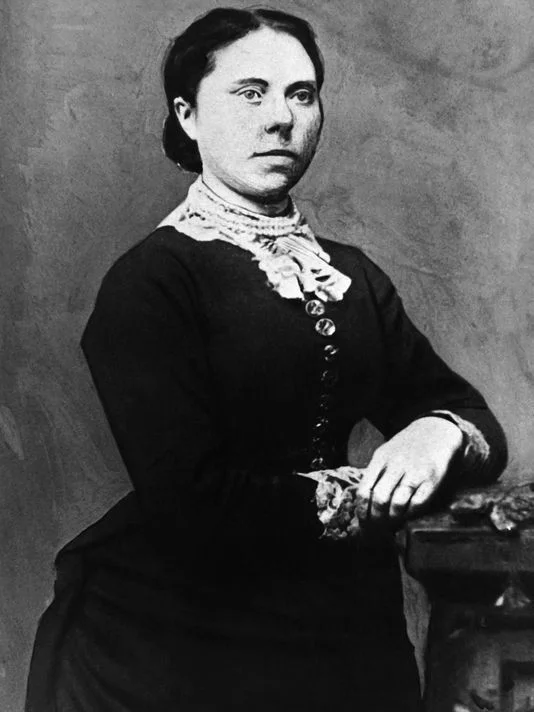
So who exactly is Belle Gunness? Belle Gunness (also known as “Hell’s Belle”) is one of the earliest and foremost examples of a female serial killer—and, perhaps most notably, she wasn't a female serial killer who killed her victims an impersonal way. No, Belle Gunnes brutally murdered her victims on her property in Indiana, which has become known as her "murder farm." I first learned Belle’s story through my favorite true crime podcast, Sword and Scale, and I’ve continued to be fascinated by it ever since. Belle was a Norwegian-American living in Indiana in the late 1800’s and early 1900’s. She is suspected of having killed between 25 and 40 people, mostly men. Her motives? It’s believed she killed suitors in order to collect life insurance and other valuables. Belle was legally declared dead in 1908, though she essentially disappeared into thin air. For years in the early 1900’s, reports circulated of Belle sightings everywhere from San Francisco to New York. The intrigue surrounding her disappearance and the brutal nature of her crimes have earned Belle a top spot in American crime folklore.
In HELL’S PRINCESS, Harold Schechter - a true crime writer who specializes in serial killers - turns his attention to unraveling the mystery of Belle Gunness. I’m thrilled to share an excerpt of the book with CBTB readers today! Read on for more information on HELL'S PRINCESS, and for an excerpt from the book.
About Hell’s Princess

In the pantheon of serial killers, Belle Gunness stands alone. She was the rarest of female psychopaths, a woman who engaged in wholesale slaughter, partly out of greed but mostly for the sheer joy of it. Between 1902 and 1908, she lured a succession of unsuspecting victims to her Indiana “murder farm.” Some were hired hands. Others were well-to-do bachelors. All of them vanished without a trace. When their bodies were dug up, they hadn’t merely been poisoned, like victims of other female killers. They’d been butchered.
Hell’s Princess is a riveting account of one of the most sensational killing sprees in the annals of American crime: the shocking series of murders committed by the woman who came to be known as Lady Bluebeard. The only definitive book on this notorious case and the first to reveal previously unknown information about its subject, Harold Schechter’s gripping, suspenseful narrative has all the elements of a classic mystery—and all the gruesome twists of a nightmare.
About Harold Schechter:
Harold Schechter is an American true-crime writer who specializes in serial killers. Twice nominated for the Edgar Award for Best Fact Crime, he is the author of the nonfiction books Fatal, Fiend, Bestial, Deviant, Deranged, Depraved, The Serial Killer Files, The Mad Sculptor, and Man-Eater. Schechter attended the State University of New York in Buffalo, where he earned his PhD under the direction of Leslie Fiedler. He is a professor of American literature and popular culture at Queens College of the City University of New York. Schechter is married to poet Kimiko Hahn and has two daughters, the writer Lauren Oliver and professor of philosophy Elizabeth Schechter.
Learn more about Harold Schechter here.

Excerpt: HELL’S PRINCESS by Harold Schechter
Little A; April 1, 2018
HORROR
He arrived late Sunday, May 3, and stayed overnight at the Hotel Teegarden.
Early the next day, he made his way to the office of the La Porte Herald, purchased back issues of all the daily papers from the date of the fire on, and spent the next hour or so poring over them. He then proceeded to the sheriff’s office and introduced himself to Al Smutzer, who listened to his tale, then drove him out to the Gunness farm.
By then only two men were still engaged in digging through the rubble: Belle’s hired hand, Joe Maxson, and her neighbor, Daniel Hutson. Hoping to find some clue to his brother’s fate, Asle joined in the work, while Maxson and Hutson kept an eye out for Mrs. Gunness’s still-missing head.
The cellar yielded nothing but charred household debris. That night, Asle accepted the hospitality of Belle’s neighbors, the Swan Nicholson family, who were happy to open their home to a fellow Norwegian. When he returned to the Gunness farm early the next day, Maxson and Hutson were already at work, shoveling through the ruins of the cellar.
Asle spent some time hiking around the property, searching for anything suspicious. Seeing the big lake nearby, he returned to the two diggers and—as he later testified—“asked some questions, whether there were any holes in the ice on the lake in the winter, how deep the water was.” If his brother had met with foul play, Fishtrap Lake would have been a handy place to dispose of the body. But as far as Maxson and Hutson recalled, the lake had been a solid sheet of ice all winter.
It seemed to Asle that there was no point in hanging around the Gunness place any longer. He would have to look elsewhere for some trace of Andrew. “I told the boys goodbye,” he recalled afterward, “and I started down to the road.” He hadn’t gone far, however, when he stopped and swiveled on his heels. “I was not satisfied,” he would explain, “and I went back to the cellar and asked Maxson whether he knew of any hole or dirt having been dug up there about the place in spring.”
As a matter of fact, Maxson did. Sometime back in March—he couldn’t remember the exact date—he had helped Mrs. Gunness load up a wheelbarrow with “old cans, shoes, and other rubbish,” then hauled it to a pit that had been dug in a fenced-off portion of the barnyard used as a hog lot, about fifty feet south of the house. At his employer’s direction, he had then dumped in the refuse and filled in the hole.
Asle asked Maxson to show him the spot, and the three men, shovels in hand, headed for the yard and began to dig.
It wasn’t long before their nostrils were assaulted with “an awful bad smell. Mr. Maxson told me that Mrs. Gunness had put a lot of tomato cans and fish cans there. Maybe it was they made it stink,” Asle would say. But the fetor that arose from the pit smelled nothing like rotting tomatoes and fish.
Their shovels struck the source of the stench about four feet down: “something hard, covered with a gunny sack.” There was a tear in the fabric. Through it they could see a human neck. In the dirt beside the sack lay a man’s severed arm.
Within minutes, Maxson was at the reins of Mrs. Gunness’s buggy and racing to town. Looking around the yard, Asle found an old coat and a few gunnysacks and laid them over the grisly find. Then he and Hutson picked up their shovels and carefully cleared away more of the dirt from the fetid grave.
They had just finished when Sheriff Smutzer drove up. Beside him was Coroner Charles S. Mack, an imposing, white-bearded fellow, garbed in a rumpled three-piece suit with a wing-collared shirt, black bow tie, and fob chain strung across his vest. Under Mack’s watchful eye, Smutzer and the others soon brought the rotted body parts to the surface.
Coroner Mack would later depose that it was impossible to provide a “particular and minute description” of the corpse, “owing to the fact that . . . the head was separate from the torso, as was each arm from the shoulder down, and each leg from about three inches above the knee down; and to the further fact that putrefaction had set in.” The face, moreover—or what remained of it—was, in the words of one chronicler, “a thing of horror”: sunken holes for eyes, a leering gash for a mouth, a zigzag crack running from the top of the skull to the forehead.
Certain deductions could be drawn from the putrid remains despite their appalling condition. It seemed clear, for example, that the victim “had fought for his life. Across his left wrist, as if he had lifted it to ward off a slashing blow, were two deep cuts laying it open to the bone. Another savage blow had chopped off the first joints of every finger of his right hand. In a death grip the mutilated hand held a tuft of short brown curly hair torn from the head of his murderer.”
The ghastly face—though resembling a Halloween horror mask more than anything human—also retained enough of its features to make an identification possible. “I recognize it by the form of the face—across the eye—the forehead—across the cheeks,” Asle Helgelien would later testify. “When you have been with your brother every day for fifteen years, you know him.”
Asle’s long search for his brother Andrew had come to an end in a trash pit in Belle Gunness’s barnyard.
A drizzling rain had begun to fall. As Coroner Mack squatted on his haunches for a nearer look at the unearthed remains, Sheriff Smutzer asked Joe Maxson if he knew of any other “soft spots” on the property—places where holes had been dug, then loosely covered over with dirt. Maxson pointed to a spot a short distance away.
By then, a small crowd of curiosity seekers had gathered at the farm. As they pressed their faces to the wire mesh fence, Maxson, Hutson, and Smutzer began to dig. Three feet down, beneath a pile of rubbish, they uncovered a jumble of putrefied body parts: naked torsos wrapped in burlap, heads, arms, and legs scattered around.
The buggy shed was turned into a makeshift morgue for the hideous trove. There were four victims in all: two men, one woman, one female adolescent, each divided into six pieces. As with Andrew Helgelien’s corpse, few firm conclusions could be drawn from the dismembered and badly decomposed relics. The difficulty faced by medical investigators can be seen in the deposition of Dr. Harold Schechter
Franklin T. Wilcox of La Porte, brought in by Coroner Mack to conduct the autopsy on the adult female:
With the exception of the uterus, none of the viscera could be recognized. The right arm was severed by a chopping instrument an inch below the head of the humerus. Both arms were detached from the body. The two femora were cut off through the lower third. There were found four arms and four forearms with hands with the body, but it is impossible to say which, if any, belong to this body. There were found two skulls and two lower maxillary bones with this body, but it is impossible to say which, if any, belong to this body. There were also two sets of fibula but they could not be positively identified as belonging to this body. From the examination it is impossible to determine the cause of death.
Though in equally appalling condition, the remains of the younger female did retain one distinguishing feature: a matted tress of long blond hair sprouting from the fleshless skull. From this unmistakable evidence, witnesses who knew her in life were able to positively identify the butchered young woman.
Jennie Olson had not been sent away to a seminary in California two years earlier. She had not gotten married and was not on her honeymoon journey. Chopped into a half-dozen pieces, she had been dumped into a corpse-filled hole and covered with rubbish in her foster mother’s hog pen. And—as newspapers around the nation would soon report—the date on which her butchered remains were brought to light, May 5, 1908, would have been her eighteenth birthday.
Excerpted from Hell’s Princess: The Mystery of Belle Gunness, Butcher of Men by Harold Schechter. © 2018 Published by Little A, April 1, 2018. All Rights Reserved.
Book Details:
Hardcover: 316 pages
Publisher: Little A (April 1, 2018)
Language: English
ISBN-10: 1477808957
ISBN-13: 978-1477808955
Crime by the Book is a participant in the Amazon Services LLC Associates Program, an affiliate advertising program designed to provide a means for sites to earn advertising fees by advertising and linking to Amazon.com. This in no way affects my opinion of the above book.








Home ownership feel like a distant dream? Zillow listings have you convinced you’ll be renting for the rest of your life? The woman at the heart of Carissa Orlando’s debut The September House feels your pain—and she’s prepared to put up with a lot if it means she and her husband can finally have a place to call their own. In this case, that might just mean living in a house that’s haunted. Playful and irreverent, spine-tingling and spooky, The September House puts a fresh spin on the classic haunted house story, delivering an immersive tale about the secrets lurking within one building’s walls, and within the lives of its inhabitants.